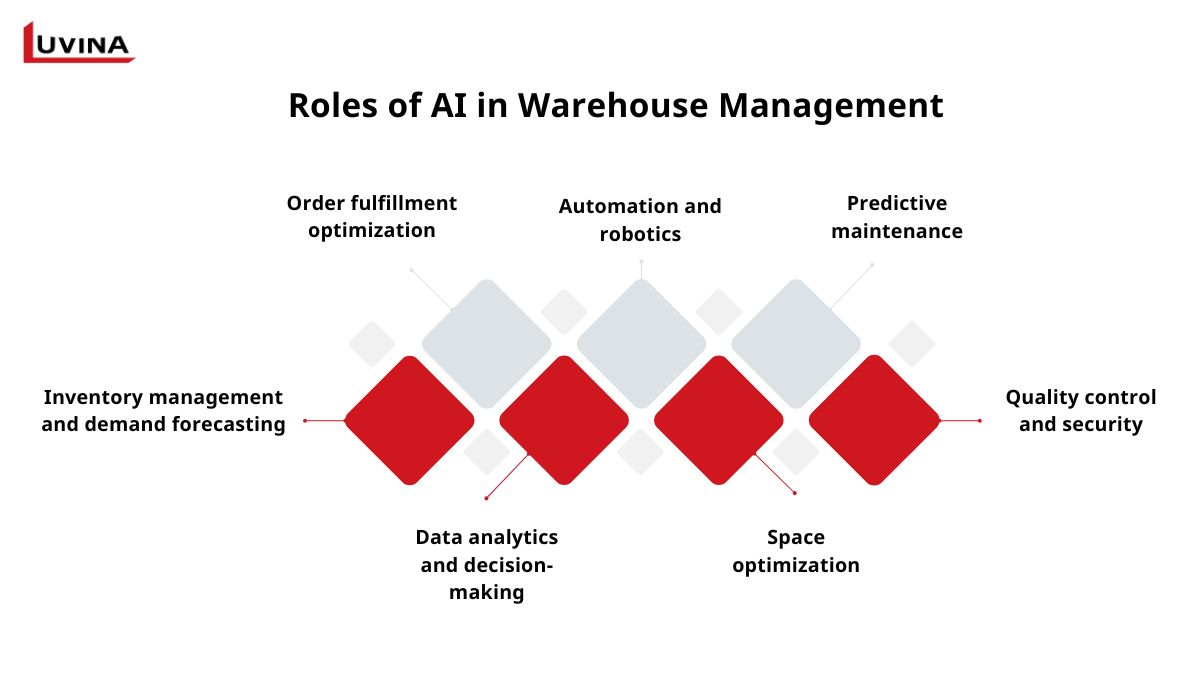
AI in WMS is no longer optional; it’s becoming the backbone of intelligent, real-time operations. This big change happens because companies need to see things in real-time, make choices based on data, and have processes that can change when the market does.
In this article, we’ll show how AI is changing warehouse management in a big way, look at real examples of how it’s used, point out the clear benefits for companies of all sizes, and think about what’s coming next for smart warehouses.
What Is AI in Warehouse Management Systems (WMS)?
Fundamentally, AI in WMS is the use of artificial intelligence tools to imitate human decision-making and learning to change the daily operation of warehouses. Unlike conventional rule-based systems, artificial intelligence gives the power to evaluate huge datasets, react in real-time, and automate activities formerly totally reliant on human labor.
The scope of AI in warehouse automation goes far ai in warehouse automation beyond simple mechanization. It blends cutting-edge technologies, including:
– Machine learning: Learns from past patterns/ historical data to forecast future events/trends or form clustering SKU to streamline inventory and processes.
– Computer vision: Let’s machines “see” and monitor products all across a warehouse.
– Robotics: Deals with demanding or repeated physical operations, including picking, packing, and carrying products with great precision.
AI systems can understand patterns in their environment without a fixed and immutable script, which is a key part of distinct data from automated systems in distribution centers (i.e., AI adapts to the physical warehouse where stock is supposed to go, or being human-aware and making smart decisions based on it). When integrated into the warehouse system, AI enables adaptive responses to market shifts and operational challenges.